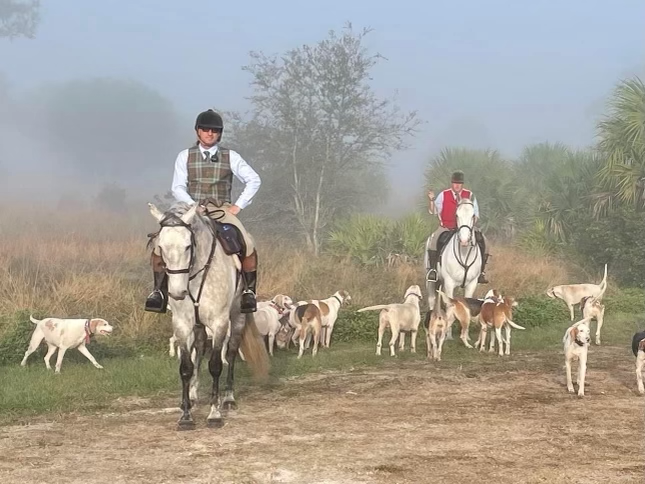
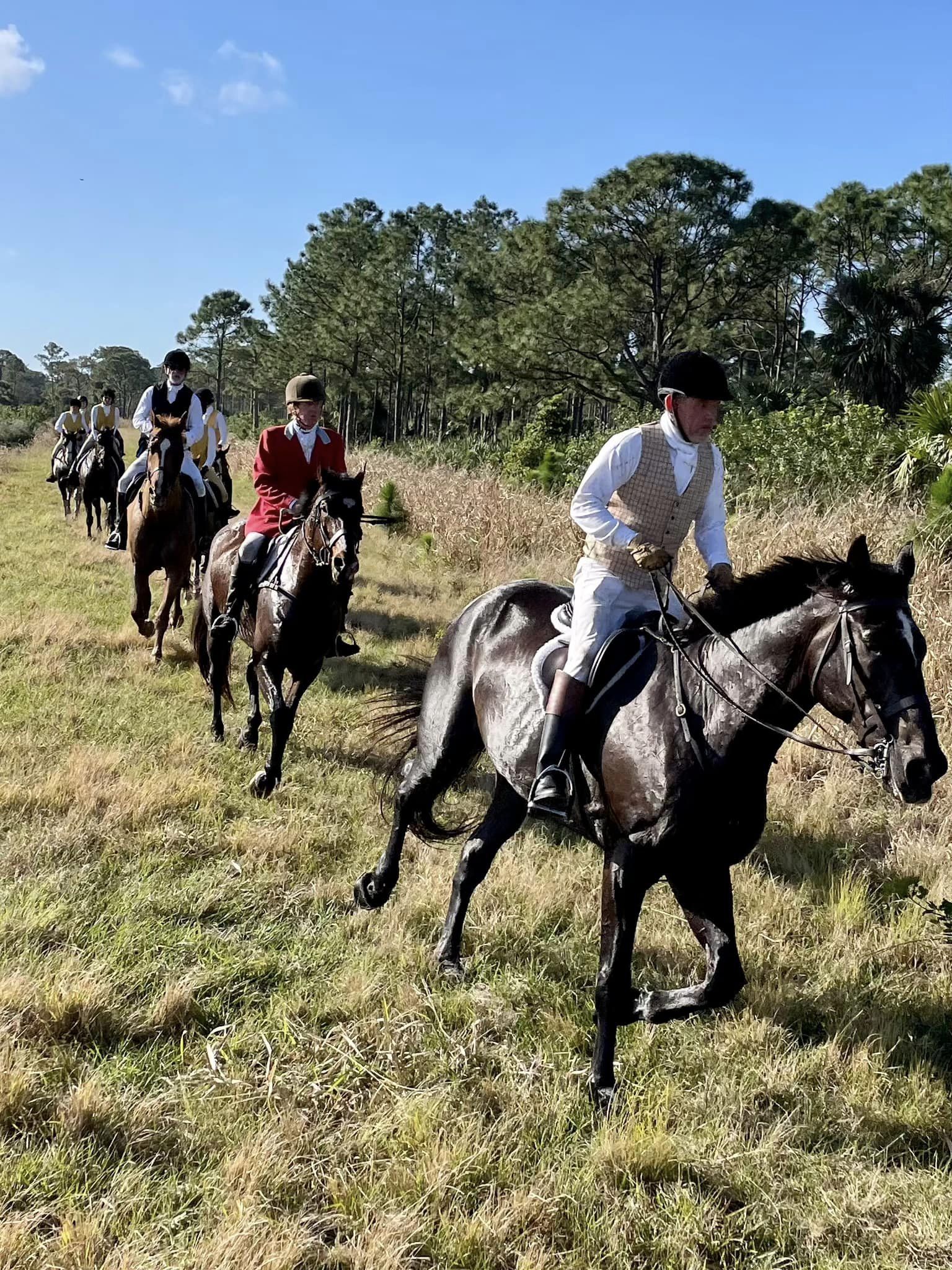
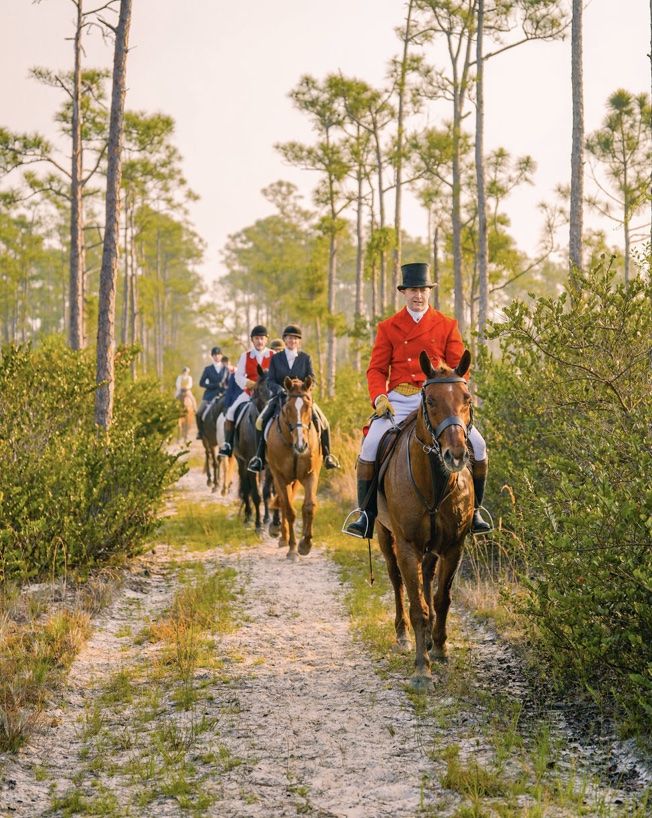
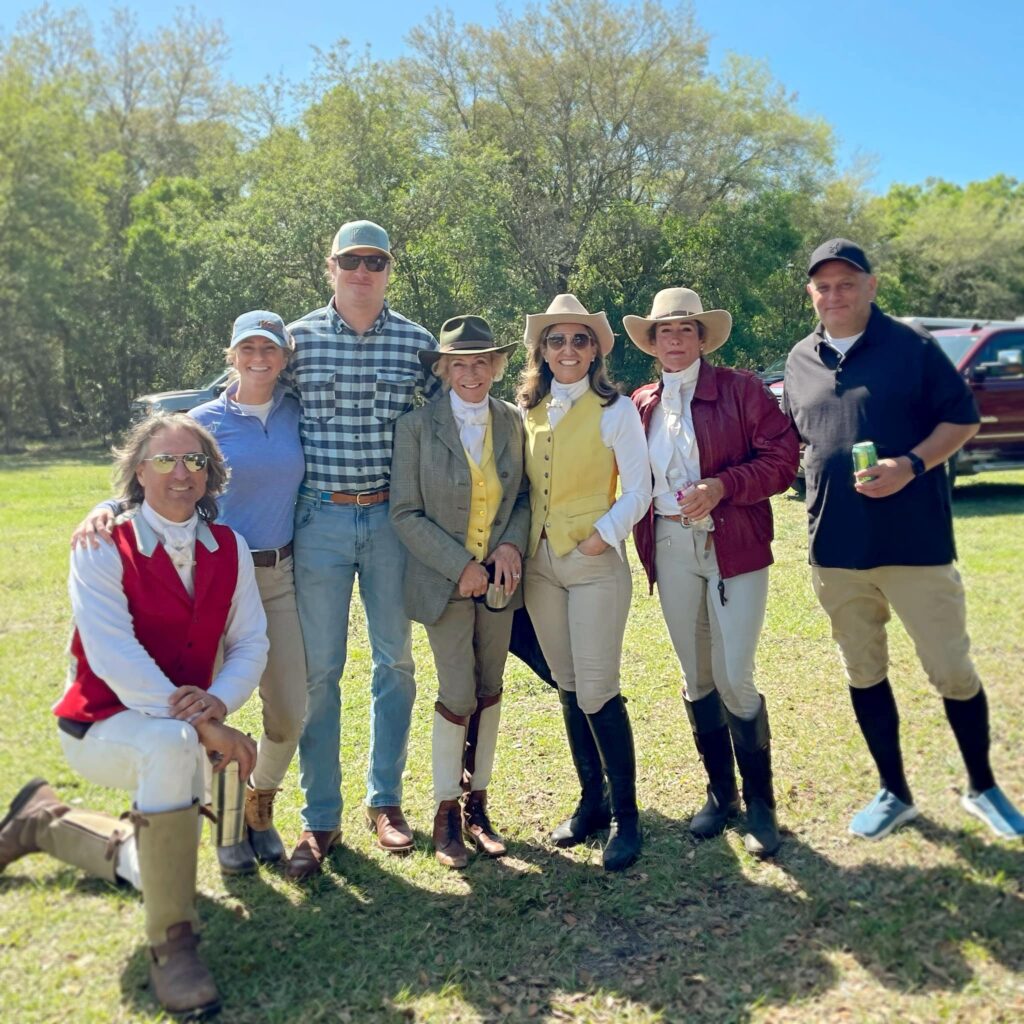
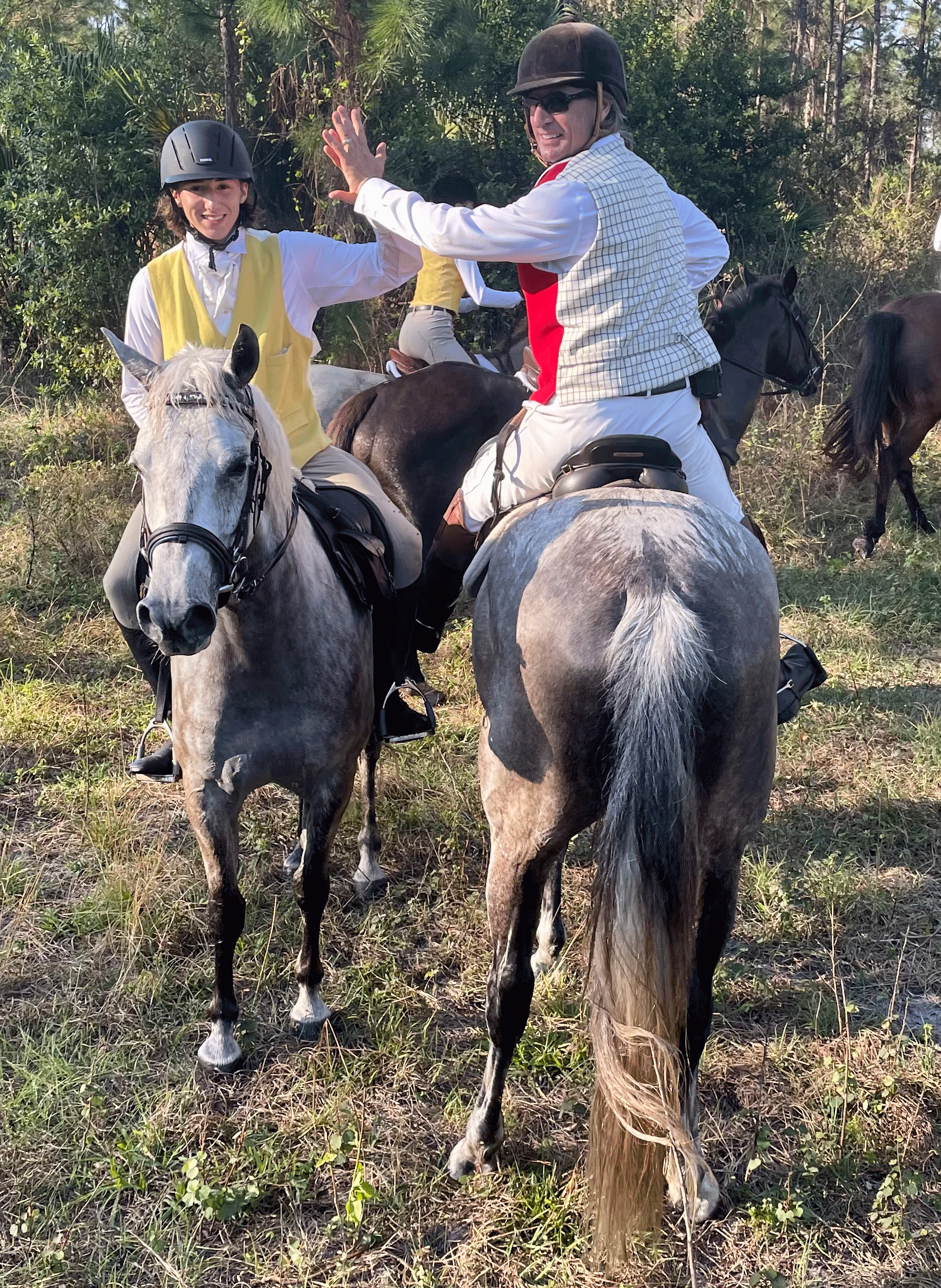
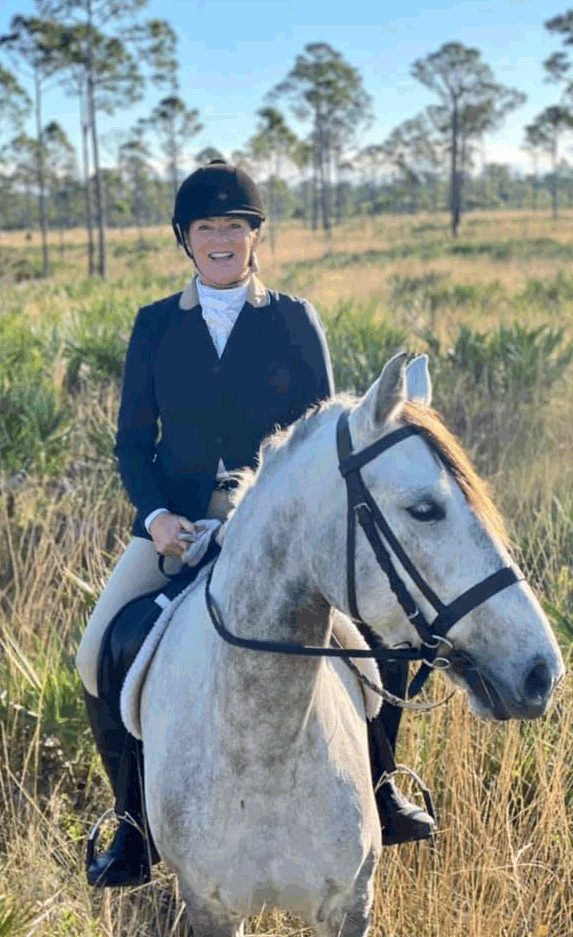
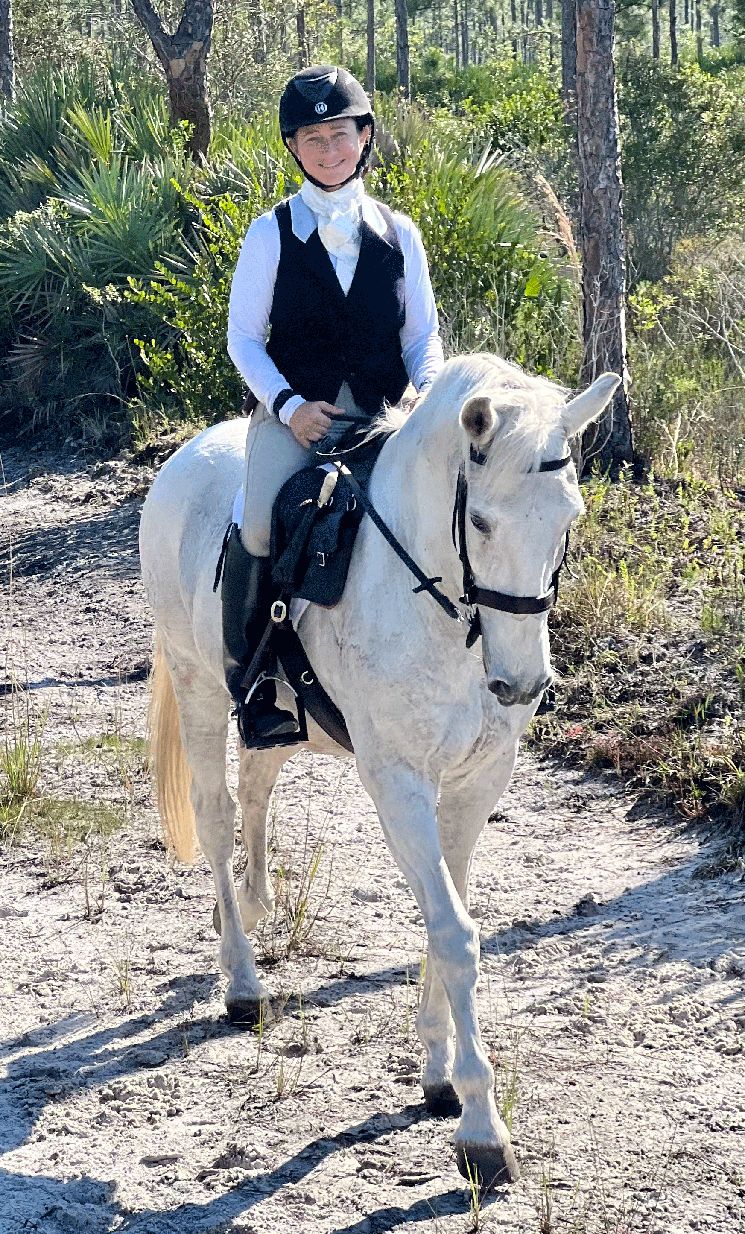
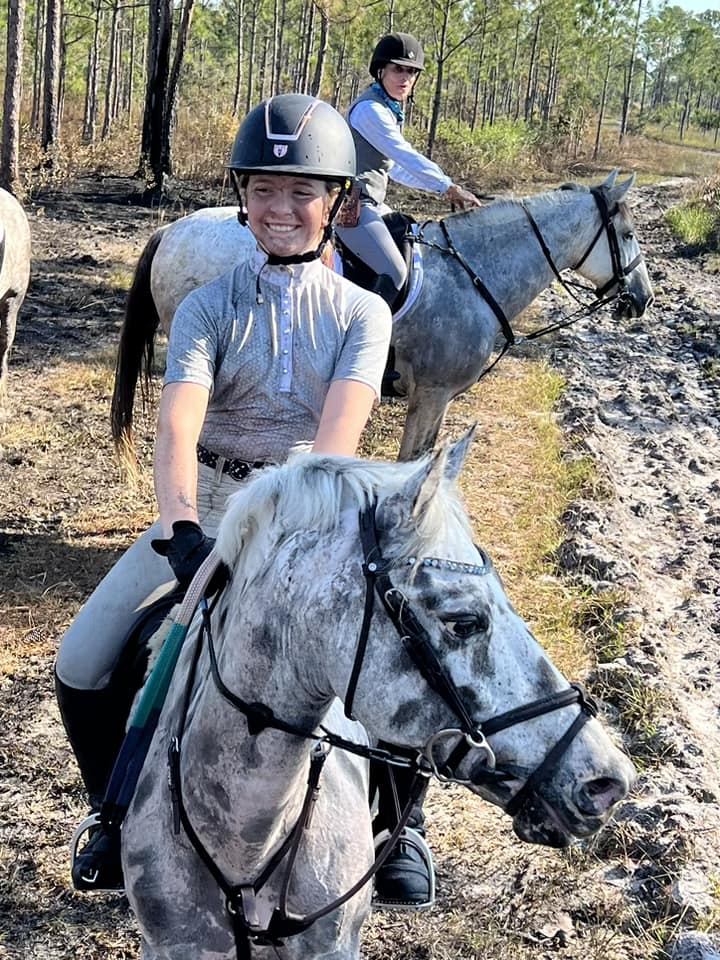
The Palm Beach Hounds have been hunting in South Florida since 1979. We are the Southern most hunt in the United States. Members of our group get to enjoy the unique experience of riding Southern Florida’s pristine country with a group of friends.
For those who are more experienced with the hunt, they will find plenty of adventure that comes with the “thrill of the chase.” It’s a rare day not to strike on the scent of coyote or bobcat in our territories and occasionally the hounds hit on a red or grey fox. Every hunt is a new adventure!
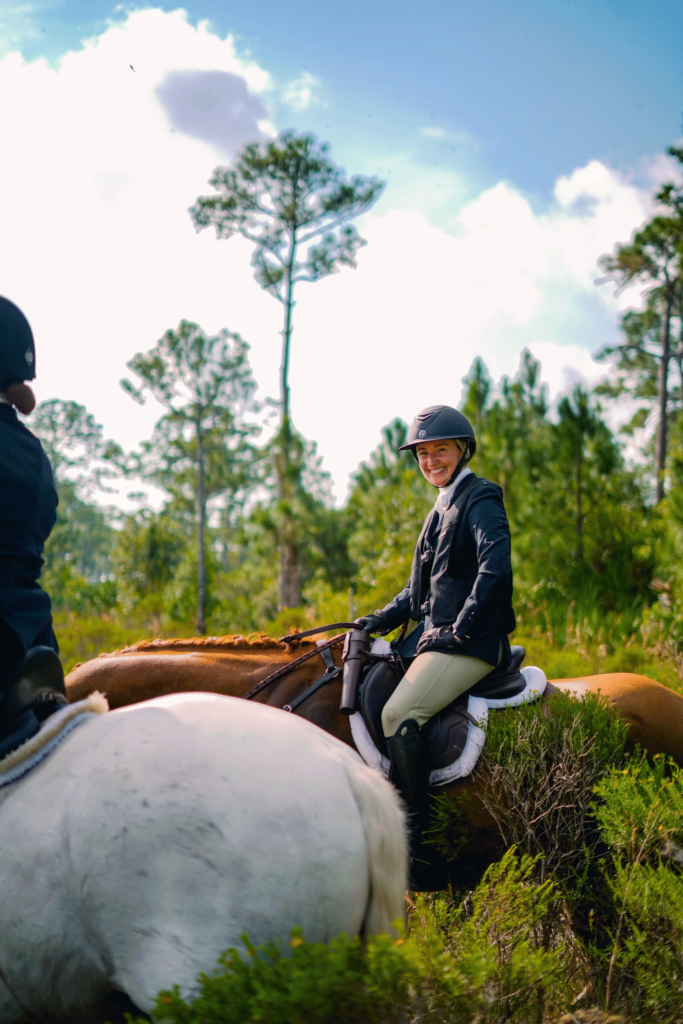
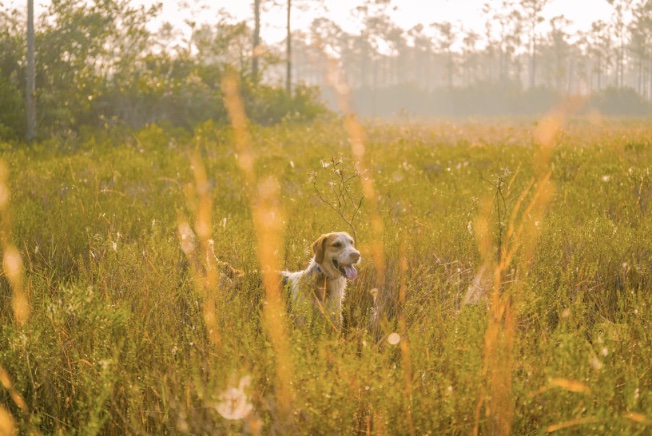
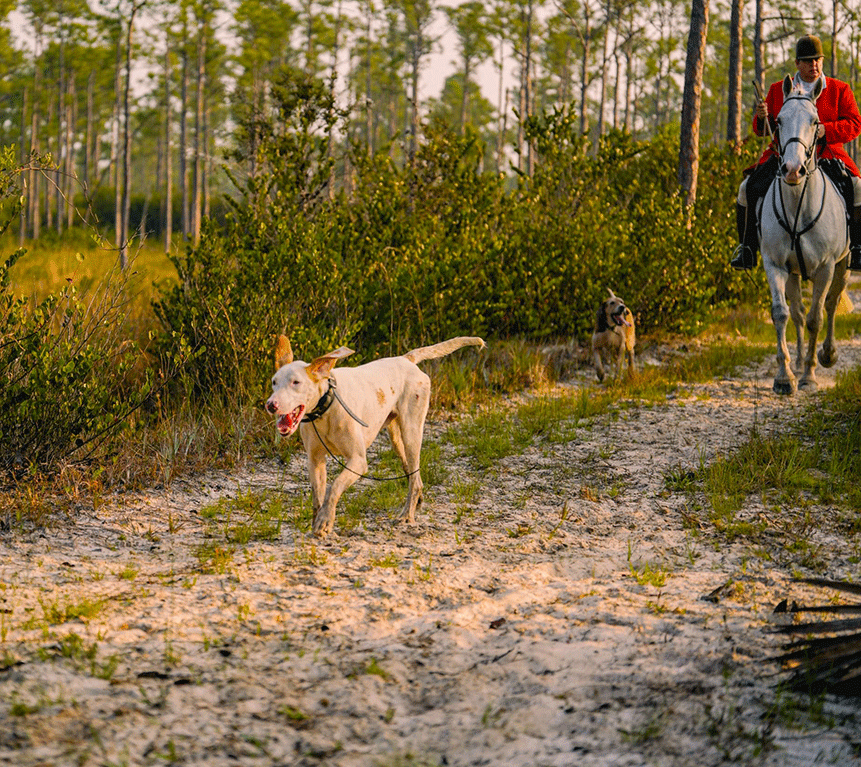
Our territories are primarily in Palm Beach and Martin counties and are mostly level with open fields, pinewoods, oak and cypress hammocks, freshwater marshes, low-growing palmetto, streams and reed-fringed lakes. Any level of rider can enjoy traversing these beautiful areas with us.
Foxhunting has fascinated sportsmen for centuries with published accounts by King Edward II dating back to 1420. The first records of foxhunting in North America are recorded in 1650 when English foxhounds were imported to Charles County, Maryland. This began a long and storied history in the United States.
George Washington was an avid enthusiast who had an outsized impact on hound lineage. In 1785, Washington received French hounds as a gift from Lafayette; dogs he described as having voices “like the bells of Moscow” whose blood lives on in today’s hounds.
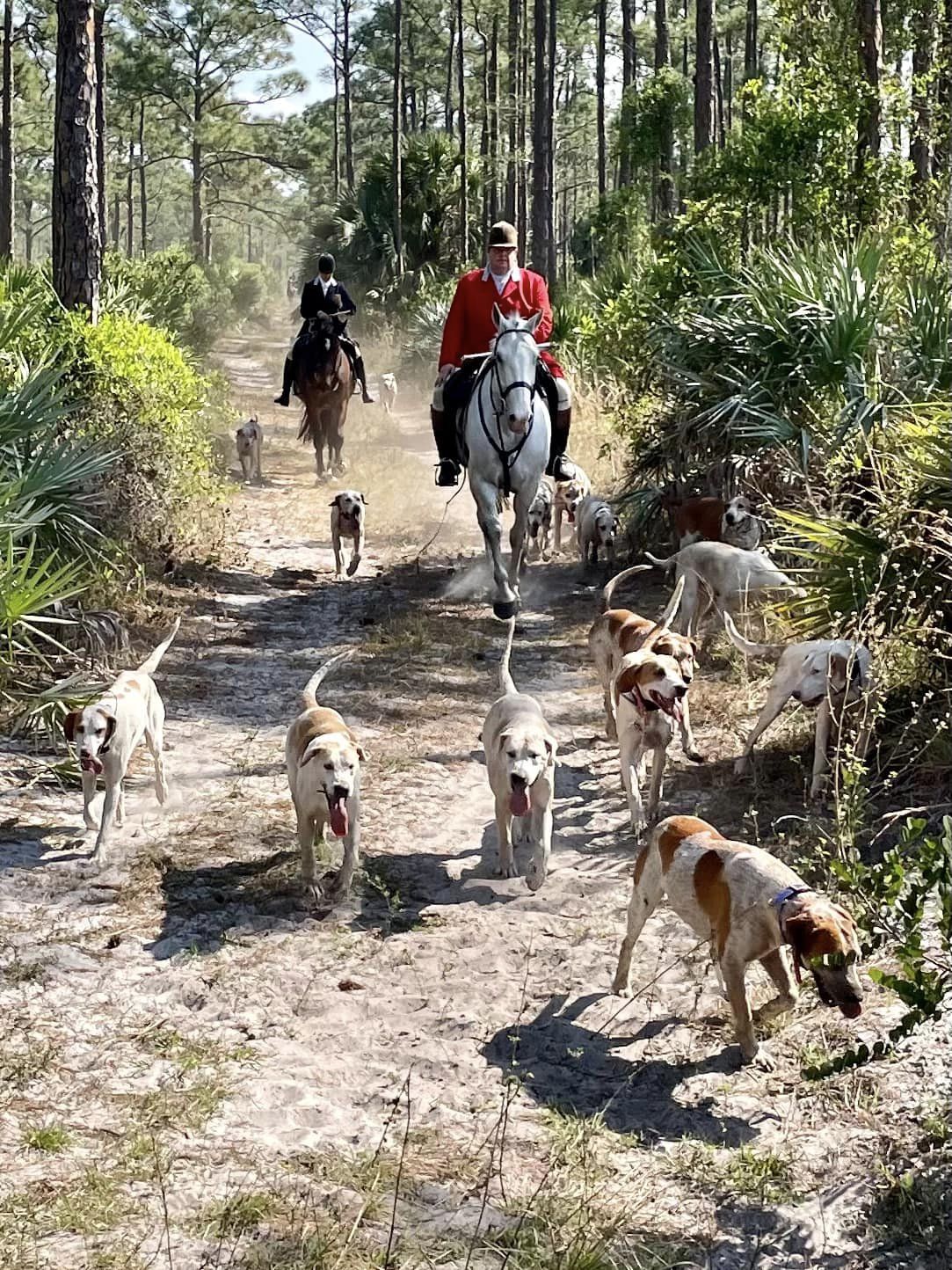
In 1826, the first foxhound club in North America was established: the Montreal Hunt in Canada. The Palm Beach Hounds is in partnership with Montreal, sharing the huntsman and pack of hounds. Our pack of hounds “live the good life” as they summer in Canada, winter in Florida, and get to hunt year-round.
Hunt culture is embedded with ceremony and tradition which ties us to history and bonds us with each other. Events such as the Blessing of the Hounds, Boxing Day Hunt, and hunt breakfasts give us the opportunities to celebrate the long-standing traditions relevant to Equestrian Foxhunting.
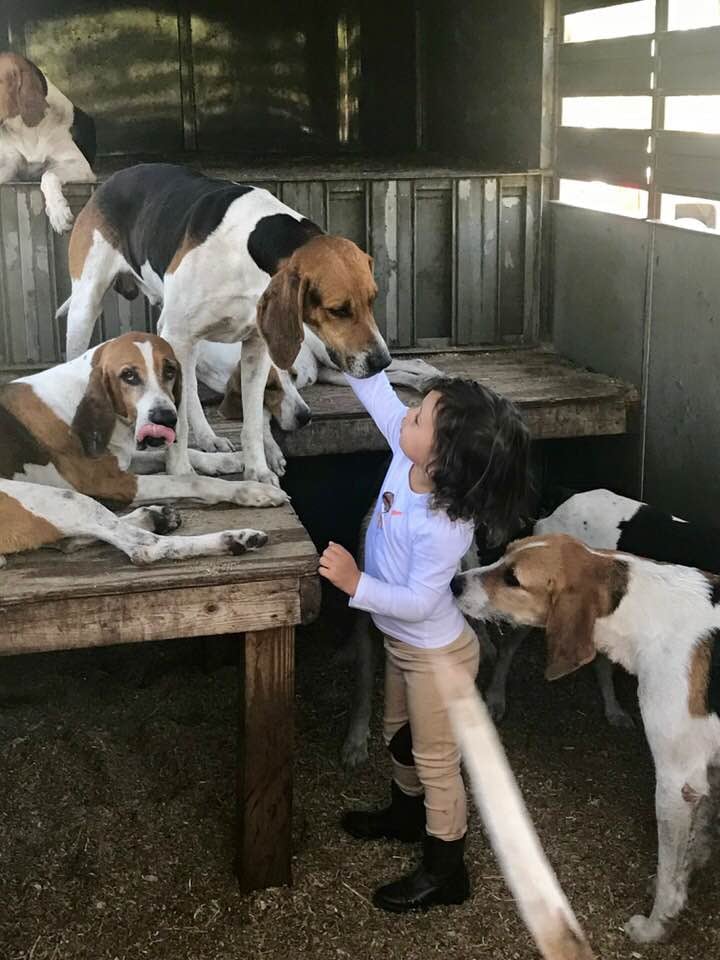
Foxhunting has always emphasized hospitality amongst members and the community. In the spirit of encouraging our community and the younger generation to experience this tradition, Palm Beach Hounds offers an annual “Free Day” to anyone who has never hunted. Juniors always have a discounted rate, and Pony Club members may always join for free.
Our club continues the foxhunting tradition of community by hosting an active social calendar as well as educational and fundraising events. Our social and educational activities include holiday parties, horseshoes and bbq, croquet luncheons, the Parade of Hounds at Wellington show grounds, and an annual Hunt Clinic.
We work to inform the public about the benefits of land preservation and the history and tradition of foxhunting in Florida.
If you would like to join us for a hunt, you may bring your horse or make arrangements with one of our members to lease theirs.
What makes a great Hunt horse?
A horse who is comfortable riding in different spots in a group - in front of, and behind, other horses and who can stay at a safe distance from others.
A horse who is comfortable riding through water and up and down banks.
A horse who has experience on different terrain.
A horse who can stand quietly at checks.
Hunting requires a lot of a horse. They must navigate differing terrain, be able to stay in place with a large group, be ready to go when the hounds run and be ready to stand quietly when there’s a check. There is a special bond between horse and rider in the hunt field as it requires trust and communication both ways.
*The Montreal Hunt Club hounds and the Palm Beach Hounds are merged into one pack. They spend their summers in Montreal and their winters in Palm Beach. They are living the good life as ‘four-legged snow birds.’
lineage from the 1800's
we hunt with hounds from the Montreal hunt
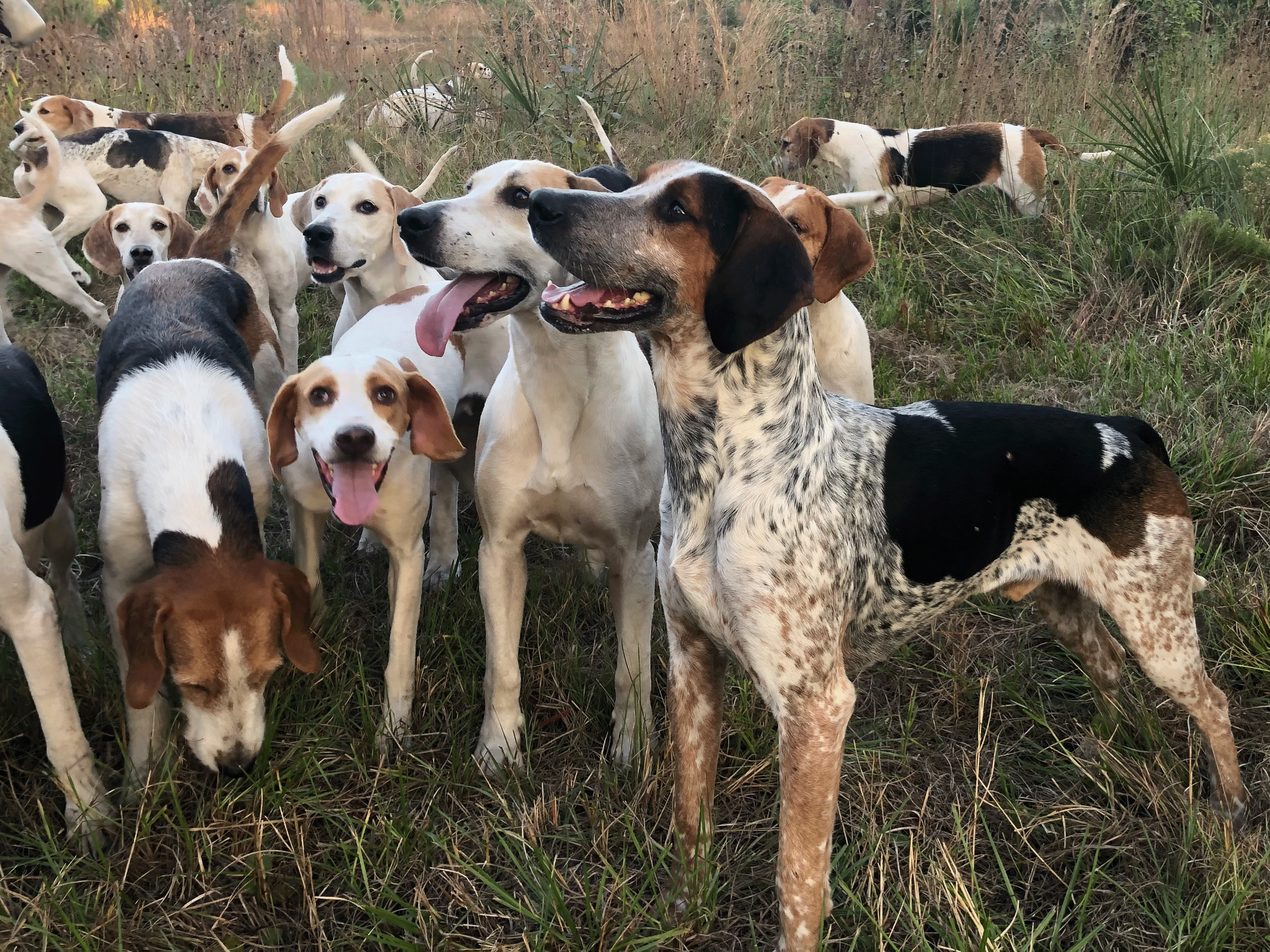
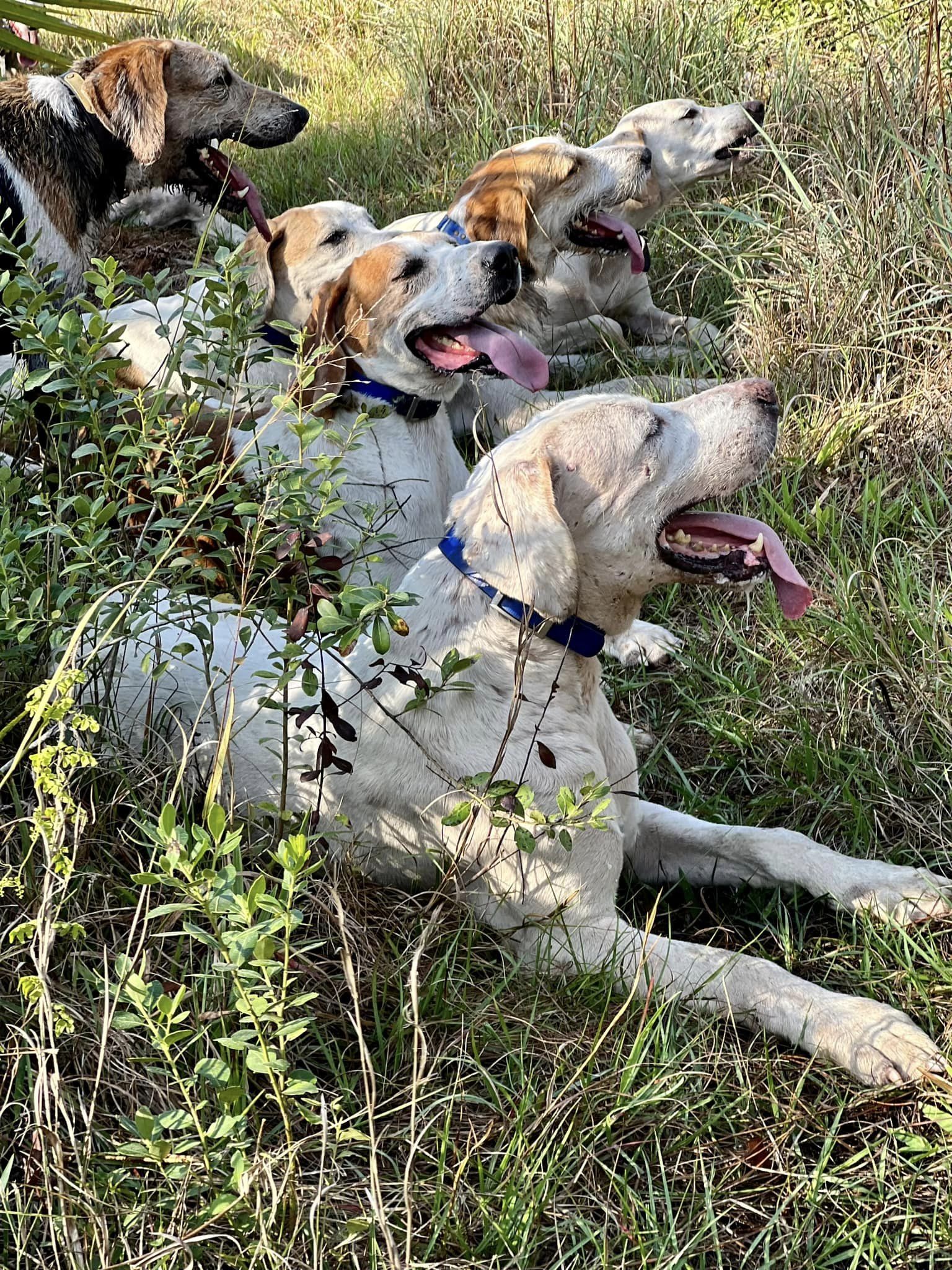
There is no hunt without hounds, and Palm Beach Hounds has the honor of hunting with some of the best in North America. We have the pleasure of hosting Huntsman Mark McManus and 10 couple from the Montreal Hunt Club to join with the 10 couple raised and maintained by our hunt in Florida.*
The Montreal Hunt is the earliest established foxhound club and the longest active hunt in North America dating back to 1826 and boasts some of the best hounds in all of foxhunting.
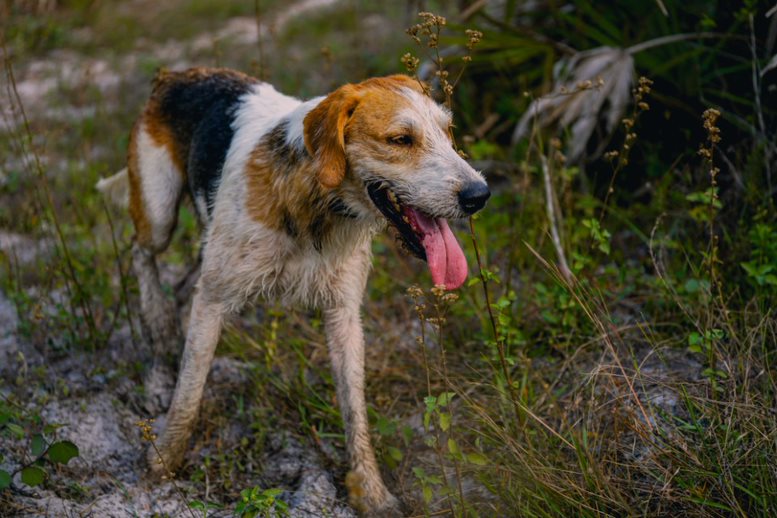
Watching the hounds work is an amazing experience: they are impeccably trained and extremely talented at picking up a scent and staying on a trail.
Today’s American Foxhound is the product of hundreds of years of breeding hounds that were brought to North America from England, Ireland, and France. Hounds have always been bred for nose (the ability to detect and interpret the scent of the quarry), cry (volume and quality of voice while giving tongue), drive (the urge to go forward on the line), stamina, speed and independence/biddability. Depending on what quarry is being hunted and what countryside is being ridden, hound lines have been refined to emphasize certain traits.
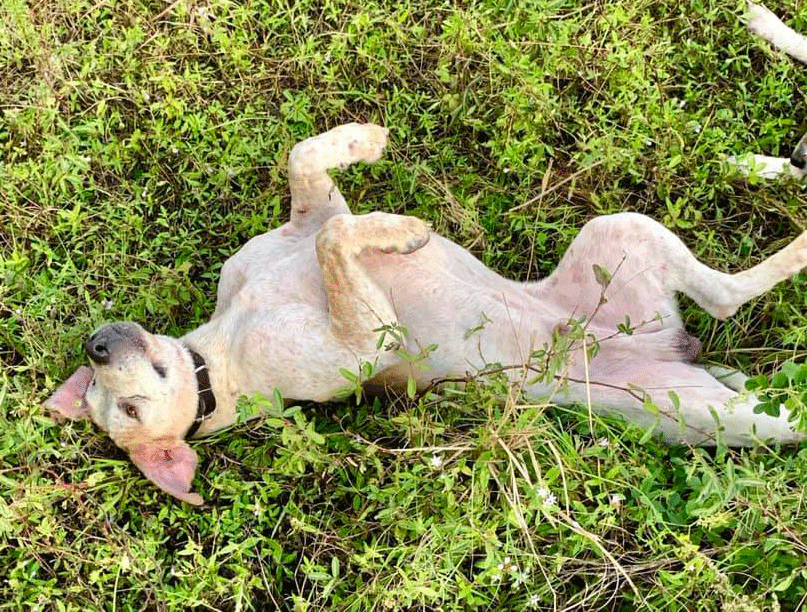
The Montreal and Palm Beach hounds are predominately modern English foxhounds with bloodlines running back over 250 years to the Duke of Beaufort in Somerset, England. They are mixed with Fell blood (a steep and rugged county in England) to give them a “ranginess” and Penn-Marydel blood to embody them with voice and perseverance. This makes them especially capable of finding a host of quarry in rugged terrain with large swamps and dense brush. They have a strong nose and loud, deep voice that carries over terrain.
Training new hounds start before the pup has turned a year old.To aide in their education, their collars are linked (or “coupled”) with an older, experienced hound. Hence, foxhounds are usually counted by the number of “couples”; i.e. 12 couple equals 24 hounds. This system not only teaches them how to hunt but, more importantly, how to hunt as a pack. The goal is to establish a pack of hounds that will run uniformly, give great voice, show stamina, develop a keen nose, and be obedient to the huntsman.
Hounds become a reflection the man, and the man a reflection of his hounds.